
Na stránkách ball dropping test is a fundamental procedure used to evaluate the impact resistance of materials and protective equipment. This test plays a critical role in determining the ability of materials to withstand sudden impacts, which is particularly important for industries where safety gear is crucial, such as eyewear and head protection. Adhering to ANSI Z87.1 standards ensures that protective devices meet the minimum impact resistance requirements to safeguard workers.
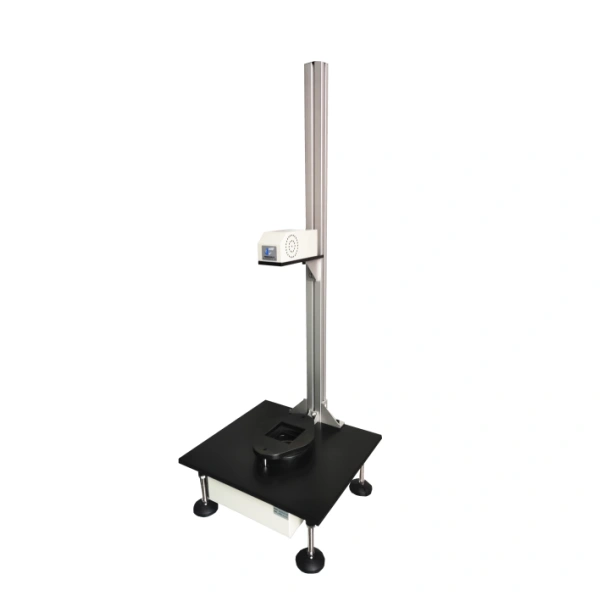
ANSI Z87.1 Impact Test: Ensuring Safety for Eyewear and Protective Gear
ANSI Z87.1 outlines the nárazová zkouška procedures for safety eyewear and face shields. One of the key components of this standard is the ball dropping test, which evaluates the impact resistance of lenses, face shields, and other protective devices. The test ensures that safety eyewear can withstand accidental impacts, such as flying debris or falling objects.
Purpose of the Test
The purpose of the ball dropping test is to assess the minimum impact resistance of protective eyewear and devices. By simulating real-world scenarios, the test provides valuable data on the ability of materials to protect users from potential hazards. The ANSI Z87.1 standard requires that each complete device—whether it’s glasses or face shields—be subjected to a controlled ball drop from a set height.
Apparatus Used in the Test
The test apparatus involves a headform used to simulate the human head, a steel ball, and a guide tube. The headform is rigidly mounted in a horizontal position on a base, and the test equipment ensures that the ball strikes the lens in line with the eyes of the headform. The steel ball is a 25.4 mm (1.0 inch) diameter sphere, weighing 68 grams (2.4 ounces). It is dropped from a height of 127 cm (50 inches) onto the device being tested, simulating the impact forces that might occur in real-life scenarios.
Na stránkách ANSI Z87.1 standard requires that the ball be freely dropped, and the test must be performed on four complete devices for each lens material and coating. Two tests are conducted on the left viewing area and two on the right, ensuring the reliability of the results.
Steel Ball Drop Test Standard: Key Specifications and Requirements
Na stránkách steel ball drop test standard defines the procedure and technical specifications required for the ball drop test. According to ANSI Z87.1, the steel ball must be dropped from a height of 127 cm (50 inches) and strike the surface of the protective device in a precise and controlled manner. The standard also outlines the necessary conditions for the headform and base setup, including the mass of the base, which should not be less than 30 kg (66 lb). The headform’s static stiffness should also ensure minimal deflection when a vertical force of 20 kg (44 lb) is applied.
Procedure for the Ball Drop Test
- Prepare the headform: The device to be tested is placed on the headform, positioned as it would be worn by a user.
- Support the device: For face shields, an additional support block is provided to stabilize the lens at its lower end, just below the chin.
- Drop the steel ball: A steel ball, 25.4 mm in diameter and weighing 68 grams, is dropped from a height of 127 cm onto the lens, in line with the eyes of the headform.
- Repeat for accuracy: Four complete devices must be tested—two tests on each of the left and right viewing areas.
This procedure ensures that protective eyewear meets the necessary impact resistance criteria for user safety.
Ball Drop Test Equipment: Choosing the Right Testing Tools
For accurate and reliable results, it’s essential to use high-quality zařízení pro testování pádu koule. The key components include the steel ball, headform, and guide tube. Cell Instruments offers precision equipment designed to meet ANSI Z87.1 standards and ensure consistent testing outcomes.
Features of Ball Drop Test Equipment
- Steel Ball: The test ball must be 25.4 mm in diameter and weigh 68 grams. It should be free from any deformities to ensure that it performs uniformly across tests.
- Headform: The headform should be rigidly mounted and able to withstand the applied vertical force without significant deflection. It is crucial for simulating real-world conditions.
- Guide Tube: The ball must drop freely through a guide tube, which ensures that it strikes the device being tested at the correct angle and location.
- Base: The base should have a minimum mass of 30 kg (66 lb) to ensure stability during testing.
By using precision equipment, manufacturers can ensure that their products meet ANSI Z87.1 standards and provide the highest level of protection for users.
Ensuring Impact Resistance with the Ball Dropping Test
Na stránkách ball dropping test is an essential procedure for testing the impact resistance of protective eyewear and safety devices. By adhering to ANSI Z87.1 standards, manufacturers can ensure that their products provide adequate protection in hazardous environments. With reliable test equipment and adherence to established procedures, companies can deliver safety gear that meets regulatory requirements and protects users from potential risks.
Cell Instruments provides advanced ball drop testers that meet the specifications outlined in ANSI Z87.1. These testers offer precise measurements, ensuring that protective eyewear and devices meet the necessary impact resistance standards.

 Čeština
  English
  العربية
  Български
  Dansk
Dansk  Deutsch
  Ελληνικά
  Español
  Eesti
Eesti  Suomi
Suomi  Français
  Magyar
  Bahasa Indonesia
  Italiano
  日本語
日本語  한국어
한국어  Lietuvių kalba
  Latviešu valoda
  Norsk bokmål
  Nederlands
  Polski
  Português
  Română
  Русский
  Slovenčina
  Slovenščina
  Svenska
  Türkçe
  Українська