
Overview of the Pendulum Impact Resistance Test
A Ingás ütésállósági vizsgálat is a key evaluation method used to determine the impact resistance of plastic materials, especially films, that are often used in packaging, construction, and various other industries. This test simulates real-world conditions by assessing how materials react when subjected to a sudden impact. The results provide critical information on a material’s toughness, durability, and overall resistance to mechanical stress. Materials that pass this test are considered more durable and are typically used in environments where they may be subject to potential mechanical forces, such as during transport, handling, or use in various applications.
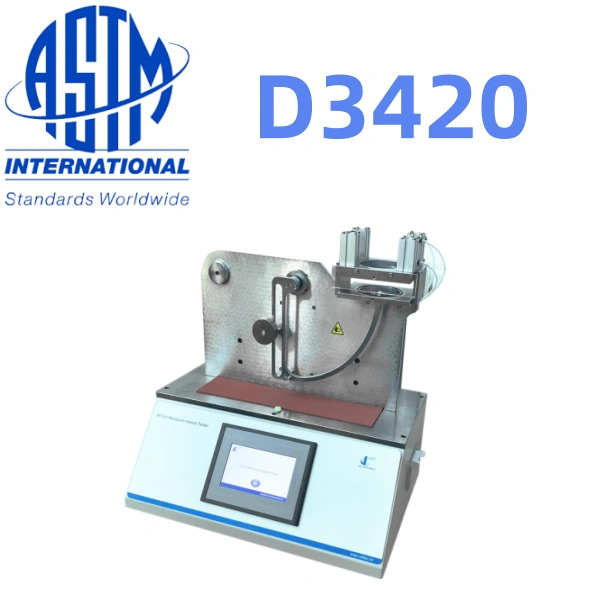
What is ASTM D3420 and How Does It Relate to the Pendulum Impact Test?
ASTM D3420 is the standard test method used to measure the ütésállóság of plastic films, particularly focusing on determining how much force the material can absorb before failing. The test method utilizes a ingás ütésmérő to apply a precise amount of energy to the specimen. The impact is measured in terms of the energy required to puncture or fracture the material. This test is essential for ensuring that plastic materials used in packaging and other applications can withstand the mechanical forces they may encounter during their lifecycle.
The key aspect of ASTM D3420 is its focus on ensuring that the test is carried out under controlled and standardized conditions. This consistency helps manufacturers obtain reliable and repeatable results, making it a go-to test method for evaluating material toughness. The test results provide vital data on the ütésállóság of the plastic, which can then be correlated to real-world performance in product applications.
The Working Mechanism of the Pendulum Impact Tester
A Pendulum Impact Tester operates based on a simple but effective principle. A weighted pendulum is released from a specific height, and the energy imparted by the pendulum is used to strike the specimen placed between two plates with a circular aperture. The force of the impact is recorded, and this data is used to assess the material’s ability to resist puncture or breakage.
In the Ingás ütközéses vizsgálat, the energy required to cause failure is recorded as the amount of energy absorbed by the specimen during the impact. This test can be conducted in two procedures: Procedure A és B eljárás. Both procedures are used to test the műanyag fóliák ütésállósága, but they differ in the specimen size and energy levels used in the test. The energy values used in Procedure A are typically smaller, and it’s more suitable for testing thinner materials, while Procedure B involves higher energy levels to test thicker or more robust materials.
Procedure and Standards for Testing Impact Resistance
ASTM D3420 outlines the procedure for conducting the Ingás ütésállósági vizsgálat. The process includes selecting the appropriate energy level for the pendulum, preparing the specimen, and conducting the test under controlled conditions. The specimen is clamped between two plates with a defined circular aperture, and the pendulum is released to strike the specimen.
During the test, the ingás ütésmérő measures the energy required to break or puncture the specimen. The results are determined by the scale reading, which is used to calculate the energy to rupture. The two procedures, Procedure A and Procedure B, are similar but differ in the size of the specimen and the energy levels involved. For Procedure A, a 60 mm aperture is used, and the pendulum releases at a lower energy level. In B eljárás, a larger 89 mm aperture is used, with a higher energy level suitable for testing thicker materials.
Why is ASTM D3420 Important in Industrial Applications?
A Ingás ütésállósági vizsgálat is an invaluable tool in many industries where material toughness is crucial. Whether in plastic packaging, automotive components, vagy construction materials, the ability to withstand impact is essential. Packaging materials, for example, need to be durable enough to protect the contents during shipping and handling. Plastic films used in these applications must endure pressure, vibration, and impact forces without failing.
A Ingás ütésállósági vizsgálat ensures that materials meet specific performance standards, which helps manufacturers in selecting the right materials for their products. By complying with ASTM D3420, manufacturers can ensure that their materials meet the necessary durability standards and will perform reliably in real-world conditions.
Applications of Pendulum Impact Resistance Testing
A Ingás ütésállósági vizsgálat is widely used in the packaging industry to evaluate the durability of materials like plastic films and coatings. In industries such as food packaging, pharmaceuticals, and medical devices, the resistance of films to impact is a critical factor in determining product quality. Packaging that fails to resist impact may result in damaged goods, leading to losses and potentially harming consumer trust.
The test is also used to assess materials in the automotive és construction industries, where durability is key to the safety and longevity of products. By determining a material’s impact resistance, companies can ensure that their products meet the required standards for performance and safety.
Benefits of Using a Pendulum Impact Tester for Material Evaluation
One of the major benefits of using a Pendulum Impact Tester is its ability to simulate real-world conditions where materials face sudden mechanical stresses. Unlike static tests, which only measure the material’s response to continuous forces, the pendulum test mimics rapid impacts that materials often experience in their life cycle. This makes the results of the test highly relevant to actual performance in the field.
Moreover, the pendulum test is easy to perform and provides quick results, making it a valuable tool for quality control during production. By integrating the Ingás ütésállósági vizsgálat into their manufacturing process, companies can ensure consistent product quality and minimize the risk of failures.
Conclusion: The Role of ASTM D3420 in Quality Control
A Ingás ütésállósági vizsgálat, as defined by ASTM D3420, is an essential test for determining the impact resistance of plastic materials. It provides crucial data that helps manufacturers select the right materials for their products, ensuring that they can withstand the forces they encounter during use. This test is particularly important in industries such as packaging, where material durability is vital to product integrity.
By utilizing a Pendulum Impact Tester that adheres to ASTM standards, manufacturers can ensure their products meet the required performance criteria, reducing the risk of failure and improving overall product quality. Whether for packaging materials or components used in other industries, the Pendulum Impact Resistance Test is a reliable and accurate method for evaluating material toughness.

 Magyar
  English
  العربية
  Български
  Čeština
  Dansk
Dansk  Deutsch
  Ελληνικά
  Español
  Eesti
Eesti  Suomi
Suomi  Français
  Bahasa Indonesia
  Italiano
  日本語
日本語  한국어
한국어  Lietuvių kalba
  Latviešu valoda
  Norsk bokmål
  Nederlands
  Polski
  Português
  Română
  Русский
  Slovenčina
  Slovenščina
  Svenska
  Türkçe
  Українська